Bathroom Textiles · Practical Guide
Cotton Underfoot: Choosing a Bath Mat for Comfort and Care
A bath mat is a small textile with an outsized job: soften the first step after a shower, catch drips, and fit into the daily rhythm of a room that is regularly wet. Cotton offers a familiar balance of softness and absorbency, but weave, pile, size, and drying habits determine how a mat feels and performs. Choosing well means considering not just the moment you step onto it, but what happens after.
Published November 10, 2026
A humble textile, a daily ritual
The bathroom is a room of repeated transitions: from warm water to cooler air, from a smooth tub or shower floor to the floor beyond it. A bath mat marks that boundary. It can make the landing softer and absorb some of the water carried out on wet feet. It may also bring color and texture to a space otherwise dominated by tile, glass, and hard surfaces.
Yet a mat is not a substitute for a dry floor, good ventilation, or a properly installed nonslip surface. Water can collect beneath any textile, and a mat without a secure grip may shift underfoot. The practical choice is therefore one that balances comfort with manageability: a suitable size, an absorbent surface, a reliable drying routine, and care instructions you can follow.
Cotton is a popular material because it is soft, familiar, and able to take up moisture. But “cotton” alone does not describe the experience. A lightly structured mat and a dense, looped one can feel entirely different underfoot and may need different amounts of time to dry. Construction is where the decision becomes personal.
What cotton brings to the floor
Cotton fibers take up water, making the material useful for towels and bath textiles. In a mat, absorbency depends not only on fiber but on the structure surrounding it: the yarn, the loops or channels, the fabric’s weight, and how much surface is available to meet damp feet. A mat that feels thick is not automatically the most suitable for every bathroom. More material can mean a substantial, cushioned feel, but it can also mean a longer drying interval.
Descriptions may give a weight in grams per square meter, often abbreviated as GSM. This figure can help compare fabric weight when the measurements and construction are comparable, but it is not a complete performance rating. A tightly structured textile and a looped one may feel different even at similar weights. Nor does a higher number guarantee that a mat will suit a small, poorly ventilated bathroom. Treat weight as one clue among several, not a verdict.
Organic cotton is another consideration for some households. A certification such as GOTS relates to standards for organic textile production; it does not, by itself, tell you how quickly a particular mat dries, whether its backing grips your floor, or how it should be laundered. Material claims and everyday function are related, but they answer different questions. Check both.
Channels, loops, and the feel of a mat
One useful comparison is between a lightweight channel-woven cotton mat and a plush, long-loop construction. Their differences are easy to notice: one has a more defined, flatter surface; the other offers a deeper, cushioned feel. The right choice depends on how you use the bathroom, how much floor space is available, and how readily the room can dry after bathing.
Channel-woven cotton: structure without much bulk
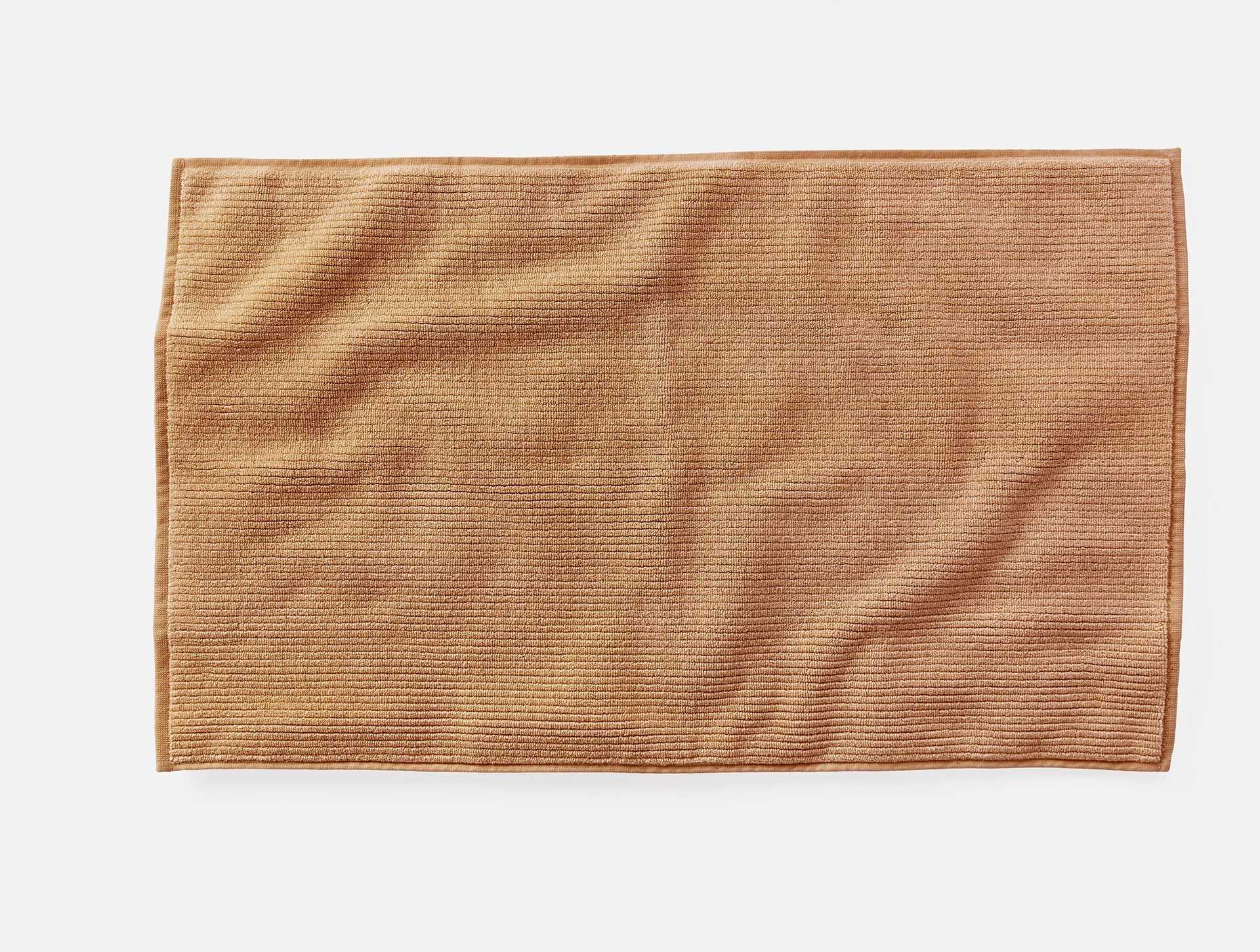
Narrow channels create visible ridges and valleys across the surface. That structure can give the textile a light, orderly feel while providing texture beneath the feet. The Temescal Organic Bath Mat, for example, is made from long-staple organic cotton spun into lightweight yarn and woven with narrow vertical channels. Its listed dimensions are 19 by 32 inches, and the care instructions call for a cold, gentle wash and low tumble drying.
A relatively low-profile mat can be a useful fit where a thicker textile might crowd a narrow walkway or sit awkwardly near a door. Its shape and texture may also appeal to people who prefer a defined surface without a lofty pile. Still, thinness should not be confused with instant drying: moisture, room humidity, airflow, and how thoroughly the mat is spread out all matter.
Looped cotton: a softer, more cushioned landing
Looped cotton exposes more raised yarn at the surface. This creates a plush feel and can make stepping onto the mat more comfortable, especially over cold tile. A long-loop construction such as the Cloud Loom Organic Bath Mat is described as substantial and absorbent, with a weight of 1,200 grams per square meter. The denser texture is appealing if softness is a priority, but it deserves a careful drying routine.
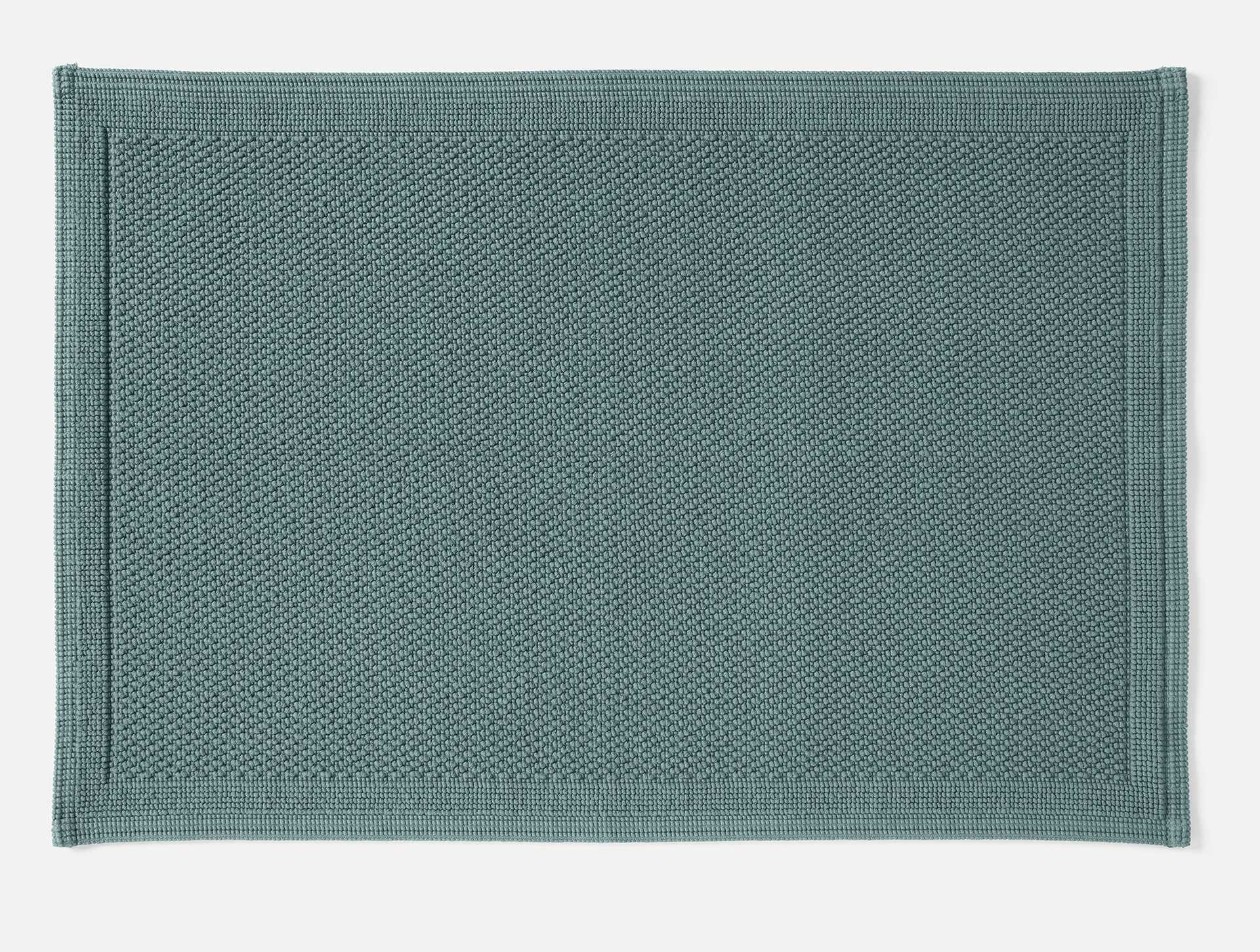
High and low loops can also form patterns. The Wildflower Organic Bath Rug, for instance, uses raised terry loops against a smoother weave to create a botanical surface. A micro-pebbled weave, as found on the Cove Organic Bath Rug, offers another sort of tactile detail: a softer, more subtly textured surface with a defined woven border. These examples illustrate a broader point. Surface design affects appearance and feel, while the care label and room conditions still determine how the textile should be maintained.
Shag and high pile: comfort with more to manage
Shag-style bath rugs offer a deeper, loftier surface. For some, that cushioned feel is the chief attraction. For others, a high pile may feel too warm, bulky, or slow to dry in a compact bathroom. The depth of the surface can also affect how easy the rug is to shake out or wash. Before choosing a plush profile, consider whether the mat can be lifted and aired regularly, and whether the washer and dryer can accommodate it without being overloaded.
Measure the landing, not just the room
A mat should fit the area where it will actually be used. Measure the floor beside the tub or shower, noting the swing of the door, nearby cabinetry, drawers, and the path to the sink. A mat that looks modest in isolation can become an obstacle when it extends into a doorway or catches on a cabinet toe-kick. Leave enough exposed floor for comfortable movement and make sure the edges lie flat.
Think about the shape of the landing zone. A narrow mat may suit a tight space beside a shower; a wider one may better cover the area where you naturally stand to dry off. If more than one person uses the bathroom, consider where wet feet are likely to land rather than placing the textile solely for symmetry. A mat can help define that spot, but it should not block access or create a trip edge.
Also consider the floor beneath it. A smooth mat on a slick surface can move, especially when damp. If a textile does not have a suitable nonslip backing, use a floor-compatible nonslip underlay where appropriate, following the flooring and underlay manufacturers’ guidance. Keep both surfaces clean and dry as directed. No mat should be assumed to provide dependable traction simply because it is thick or heavy.
Drying is part of choosing
The performance of a bath mat continues after the shower ends. A mat left in a damp heap or pressed against a wet floor has little opportunity to dry. Spread it flat after use, or hang it over a rail where air can circulate around the surface. If the underside is damp, lift it so the floor below can dry as well. Good ventilation and an open bathroom door, when practical, can help reduce lingering humidity.
How quickly a mat dries varies with its thickness, weave, the amount of water it has absorbed, room temperature, airflow, and the number of people using it. A low-profile channel weave may be easier to air out than a dense, deep pile, but real conditions matter more than a broad promise on a label. If a mat remains damp between uses, rotate it with a second one, hang it longer, or choose a construction better suited to the room’s ventilation.
Pay attention to the floor underneath. Periodically lift the mat to check for trapped moisture, residue, or changes to the floor’s finish. This is especially important on wood or other moisture-sensitive surfaces. A textile that feels dry on top may still hold moisture underneath, so lifting and airing are useful habits even when the mat appears ready for use.
Laundry: follow the label, not a universal rule
Care instructions vary by construction, finish, and manufacturer. Many cotton bath mats can be machine washed, but that does not mean every mat should be treated identically. Check the sewn-in label or product guidance before washing. Where instructions specify a cold, gentle cycle with like colors and low tumble drying, follow those directions. Remove the mat promptly from the dryer if the care information recommends it.
Before laundering, shake out loose lint and hair. Wash similar colors together and avoid packing the machine so tightly that water and detergent cannot circulate. Use a suitable amount of detergent; excess residue can leave fabric feeling coated. Do not add bleach, fabric softener, or other treatments unless the manufacturer explicitly permits them. Products that coat fibers can affect absorbency, while harsh agents may damage color or fibers.
After washing, reshape the mat and check that it is fully dry before returning it to the floor. If its care instructions permit line drying, choose a spot with good airflow. If using a dryer, stay within the recommended heat setting. High heat can be hard on textiles and finishes, and a mat that is still damp when put away can develop unwanted odors. Never rely on fragrance to disguise a textile that needs more thorough cleaning or drying.
For mats with unusual details, such as fringe, decorative binding, or a backing that may not tolerate machine washing, consult the manufacturer’s care guidance. A product’s appearance is not a reliable guide to its cleaning method. When in doubt, the label is the best starting point.
A practical choice by household
In a frequently used family bathroom, washability and a workable rotation may matter more than a particular texture. A mat that can be laundered regularly and dried fully is often easier to live with than a more elaborate option that stays damp. In a guest bathroom, a softer or more decorative surface may be welcome, provided it still fits securely and can be aired between visits.
In a small bathroom with limited ventilation, a lighter profile may be more manageable. In a cooler room with ample airflow, a thicker looped textile may deliver the softness you want without becoming a constant drying problem. These are tendencies, not guarantees. The household’s routine—the number of showers, the room’s humidity, and how often laundry is done—has a direct effect on the experience.
For a bathroom shared by people with different preferences, prioritize a size that leaves a clear path, a texture that is comfortable for regular use, and care instructions that everyone can follow. If the mat slides, bunches, or remains wet, those are practical signals that its placement or construction may not be right for the space.
A concise checklist before you decide
- Measure the available floor area. Account for doors, drawers, and walking paths, not only the tub or shower edge.
- Choose a surface deliberately. Channels create a lighter, structured feel; long loops and shag offer more cushioning and depth.
- Read the care instructions. Confirm washing temperature, cycle, drying method, and any limits on bleach or softener.
- Plan for between-use drying. Make sure you have somewhere to hang or spread the mat with air around it.
- Consider floor compatibility. Check whether a nonslip underlay is needed and appropriate for the flooring.
- Be realistic about laundry. A washable mat is useful only if its size and routine fit your household’s machine and schedule.
This checklist is less about finding a single “best” bath mat than about matching a textile to its setting. A compact, low-profile mat may be right for one bathroom; a plush looped surface may be more comfortable in another. Neither choice is inherently superior if the size, drying time, and maintenance routine are poorly matched to the room.
Comfort is a system, not a feature
The best bath mat is not simply the softest one or the thickest one. It is the one that makes the landing more comfortable without complicating the room’s daily care. Cotton gives designers and households a range of textures, from structured channels to deep loops, but every construction asks for some attention. Measuring carefully, airing the mat, checking the floor, and laundering it as directed all help it serve its purpose.
That modest routine changes the experience of an ordinary bathroom. A mat laid flat, dry between uses, and sized to its place feels less like an afterthought and more like a considered part of the room. Underfoot comfort begins with the textile; lasting usefulness depends on how it is chosen and cared for.
Frequently asked questions
Are thicker cotton bath mats more absorbent?
Thickness and weight can contribute to a substantial feel, but they do not alone determine absorbency. Fiber, weave, pile, and finishing all matter. A thicker mat may also take longer to dry, so consider the room’s airflow and your ability to hang it between uses.
How often should a bath mat be washed?
There is no single schedule for every household. Frequency of use, humidity, visible soil, and how thoroughly the mat dries all play a part. Wash it when it needs refreshing and follow its care label; air it fully between uses rather than waiting for laundry day to address dampness.
Can a cotton bath mat prevent slips?
A cotton surface can absorb some moisture, but it is not automatically a nonslip safety device. Mats may shift on smooth floors, particularly when wet. Use an appropriate floor-compatible grip or underlay if needed, keep the area clean and dry, and make sure the mat lies flat.
Why does a mat need to be lifted after use?
Water can remain beneath the textile even when the upper surface feels dry. Lifting the mat allows both the backing or underside and the floor to air out, helping prevent moisture from lingering where it is difficult to see.